
Plants and everyday foods to keep away from cats
Lilies, common houseplants and everyday human foods that are risky for cats — plus safer swaps and what to do straight away if a cat chews one.
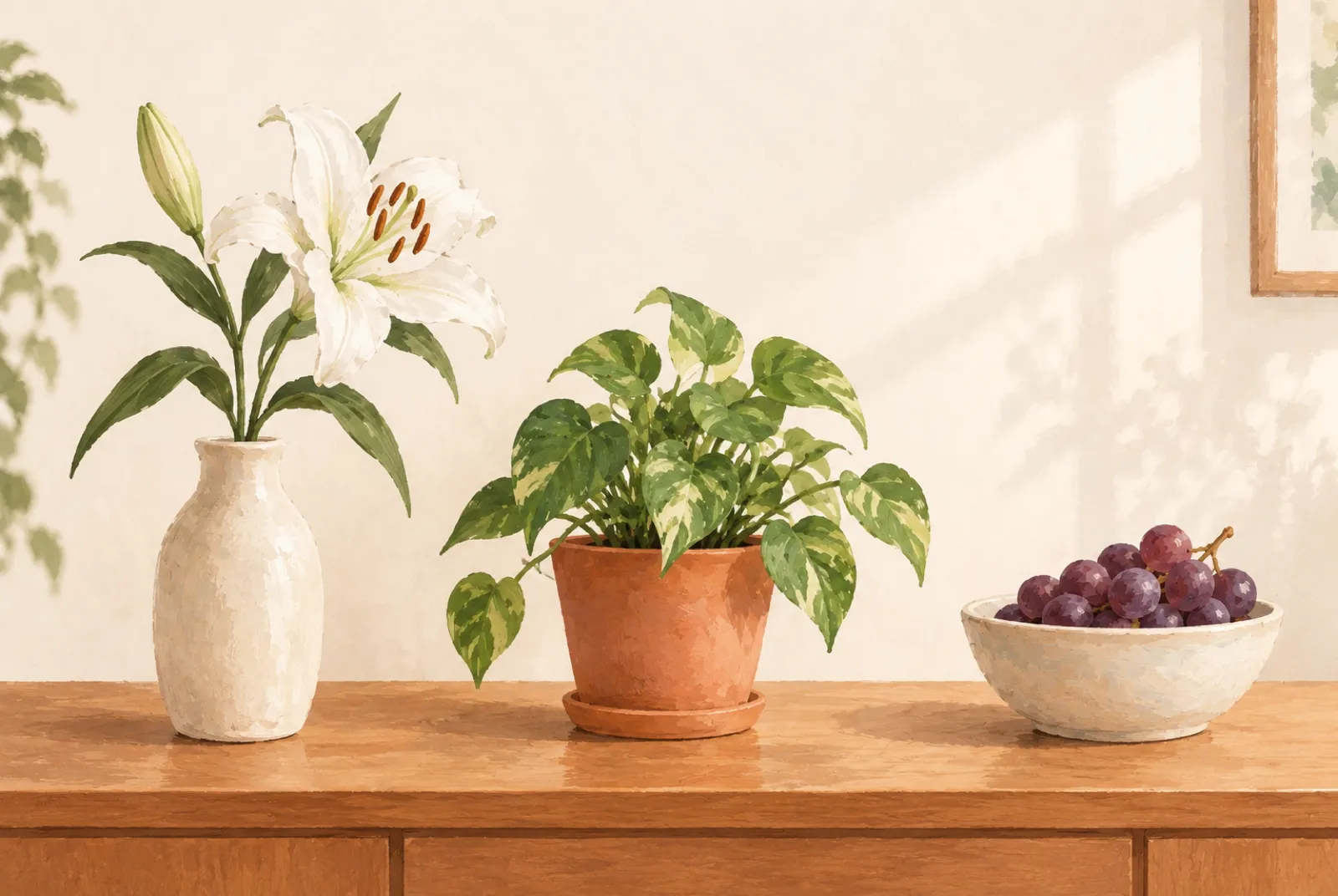
Why some “just a nibble” items are serious
Cats explore the world with their mouths as much as their paws, and they are small animals — a bite that would mean nothing to a person can be a real dose for a cat. The most useful habit is not memorising a danger list but knowing where the authoritative one lives: the ASPCA Animal Poison Control team maintains a searchable list of toxic and non-toxic plants for cats, and its guidance covers everyday foods too.
Source: ASPCA toxic and non-toxic plants: cats list.
This guide covers the items cat owners most often meet — a bouquet on the table, a new houseplant, a snack within reach — and the response that matters when prevention fails. It is a prevention guide, not a treatment one: for any actual exposure, the professionals named at the end are the right call.
Lilies: the bouquet to leave outside
If one plant deserves its own rule, it is the lily. The US Food and Drug Administration warns that lilies in the “true lily” family (Lilium species such as Easter, Asiatic, tiger, stargazer and oriental lilies) and the daylily family (Hemerocallis) are extremely dangerous to cats. The whole plant is toxic — stem, leaves, flowers, pollen, and even the water in the vase. A few chewed petals, pollen licked off fur during grooming, or a drink from the vase can lead to kidney failure within days.
Source: US FDA: lovely lilies and curious cats.
Early signs the FDA lists — drooling, vomiting, loss of appetite and reduced activity — can appear within hours, and kidney damage follows quickly. The practical rule is simple: no true lilies or daylilies in the house, and none in a garden a cat uses. Plants with “lily” in the name but different families — lily-of-the-valley, gloriosa lily — bring serious risks of their own, while calla and peace lilies mainly irritate the mouth. When in doubt about any “lily”, treat it as off-limits.
Other common risky plants
The ASPCA’s cat plant list is long, and the risky entries include some everyday favourites. Among the commonly met ones it marks toxic to cats are sago palm, tulip and daffodil bulbs, azaleas and rhododendrons, oleander, cyclamen, kalanchoe, amaryllis, chrysanthemums and ivy. Popular foliage plants such as dieffenbachia, philodendron and pothos chiefly cause mouth irritation — painful enough to matter, though usually less dangerous than the plants above.
Source: ASPCA toxic and non-toxic plants: cats list.
Rather than trusting memory, make checking a habit: before a plant or bouquet comes home, search its name on the ASPCA list. A quick check is easier than a worried night, and far easier than treatment.
A three-step plant check
- Find the nameCheck the plant tag, the receipt, or the bouquet card for the species.
- Search the listLook it up on the ASPCA toxic and non-toxic list before it comes inside.
- Place or skipKeep risky plants out of the home entirely — height is not safety for a climber.
Human foods to keep out of reach
Sharing a bite feels kind, but several everyday human foods are unsafe for cats. The ASPCA’s people-foods list names chocolate, coffee and other caffeine sources; onions, garlic and chives — where cats are the more susceptible species; alcohol and raw yeast dough; and oily nuts that can upset a pet’s digestion. Milk and dairy surprise many owners: plenty of adult cats struggle to digest them and end up with stomach upset, so “a saucer of milk” belongs in cartoons rather than bowls.
Source: ASPCA: people foods to avoid feeding your pets.
The same list documents grapes, raisins, macadamia nuts and the sweetener xylitol chiefly as dog dangers — the cat-specific evidence there is thinner. Until a source says cats are in the clear, the safe habit is the same: keep them out of reach.
Source: ASPCA: people foods to avoid feeding your pets.
Bones deserve a mention too — the ASPCA warns that a pet who swallows one can suffer an injured or obstructed gut serious enough to need surgery. The calm approach is to keep human food out of reach, keep plates cleared, and treat the cat’s own food as their menu. If the cat begs, that is a routine question, not a feeding decision: the ASPCA’s general care guidance suggests keeping treats to a small share of the diet anyway.
Sources: the ASPCA people-foods list and ASPCA general cat care.
Safer swaps
A cat-safe home does not have to be a plant-free one. The ASPCA list has a non-toxic filter, and everyday favourites on the safe side include spider plants, Boston ferns, many orchids and roses — though thorns and tipping pots still deserve common sense. For cats who love chewing greens, a pot of cat grass gives them a permitted target, which our play and enrichment guide counts as part of an interesting home.
Source: ASPCA toxic and non-toxic plants: cats list.
For food-motivated cats, use cat-safe treats — or a little of their usual food — rather than table scraps. Enrichment, not the risky item, is what the cat was after.
What to do if a cat chews something on this list
Call straight away — do not wait for symptoms. The ASPCA advises contacting your veterinarian or its Animal Poison Control Center, which is reachable 24 hours a day, for suspected poison ingestion. Note what was chewed and roughly how much; if you can, take the plant or a photo of it with you — the FDA suggests exactly this so the vet can judge which kind of lily or plant is involved.
Sources: ASPCA general cat care and the US FDA on lilies and cats.
This page cannot weigh an actual exposure — and neither can a photo result. The professionals are the route, and sooner is the whole point.
Takeaway: Check plants before they come home, keep human food out of reach, and treat any real exposure as an immediate phone call.
Sources and review
- ASPCA Animal Poison Control: toxic and non-toxic plants, cats list
- US FDA: lovely lilies and curious cats
- ASPCA: people foods to avoid feeding your pets
- ASPCA: general cat care
- ASPCA Animal Poison Control Center
Sources last checked 2026-09-30. Sources support the statements near them; these organisations do not endorse Cat Says Hi.
Spotted an error? Tell us.
Make the room safe, then enjoy it
When the hazards are cleared, a relaxed photo can give you a structured note on your cat’s visible traits and everyday care ideas. Nothing is sent until you select Analyze, and a result is never a health check. Read the Privacy Policy for the full data-handling details.