
Gentle guides for life with your cat
Clear, source-linked ways to observe a cat, make everyday routines kinder, and know when to speak with a veterinarian.

Choose a guide
Each guide answers one everyday question. Read them in any order; none requires sending a photo.
 Observation
What breed is my cat? Pedigree, domestic shorthair and honest uncertainty
What you can and cannot conclude about a cat without papers, and how to read a possible-breed cue.Read the guide Observation
Cat coat colours and patterns: a plain-language glossary
Everyday meanings for tabby, tortoiseshell, calico, tuxedo, colourpoint and dilute.Read the guide Observation
Cat coat patterns and breed clues: what a photo can show
Describe a cat’s visible coat, colour and markings without treating appearance as proof of breed.Read the guide Behaviour
Cat body language: look at the whole moment
Read posture, ears, tail and surroundings together, and let the cat choose whether to interact.Read the guide New cats
Your cat’s first days at home: a calm settling-in checklist
One quiet room, an open carrier, food and litter placed apart, and space to let the cat choose.Read the guide Safety
Plants and everyday foods to keep away from cats
Lilies, common houseplants and human foods that are risky for cats, and what to do straight away.Read the guide Everyday care
How many litter boxes, and where to put them
The one-per-cat-plus-one rule, quiet accessible spots, and when box avoidance means a vet visit.Read the guide Grooming
How to brush a cat gently, at their pace
Choose a suitable brush, begin with brief sessions and let the cat’s response set the pace.Read the guide Enrichment
Everyday cat play and enrichment, without pressure
Offer toys, places to hide and explore, and choices that fit the individual cat.Read the guide Vet visits
What to note before a cat’s veterinary visit
Record clear changes in eating, drinking, toileting and behaviour so you can describe them accurately.Read the guide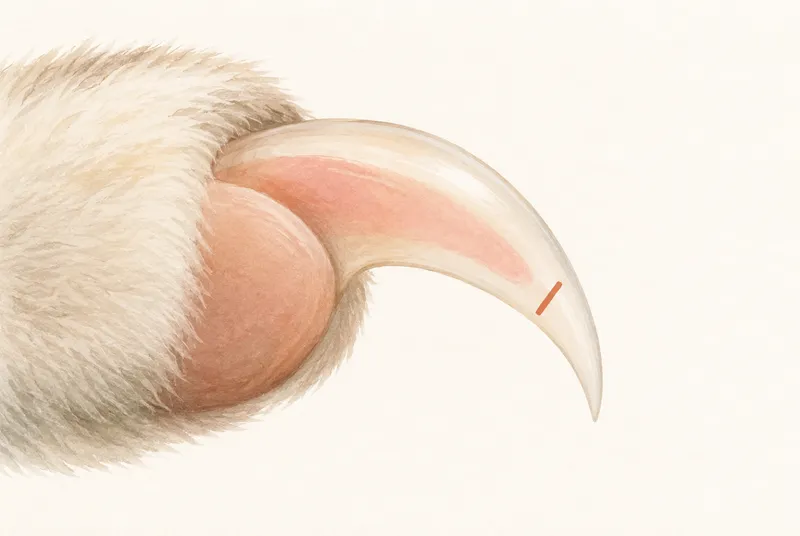 Grooming
Trimming cat claws without a battle
Which cats actually need trims, how to find the quick and clip only the tip, and when a vet or groomer should help.Read the guide BehaviourScratching: giving claws a better place to go
Choose surfaces that match how the cat scratches, place them where scratching already happens, and protect furniture meanwhile.Read the guide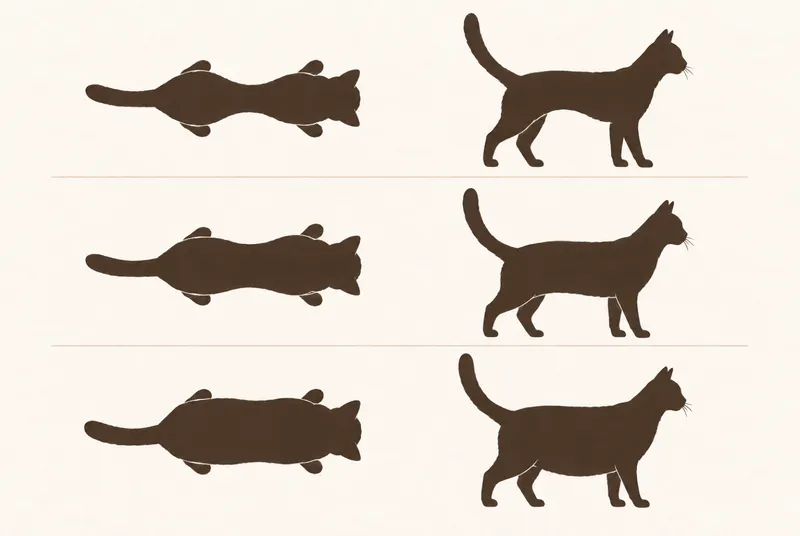 Observation
Checking a cat’s shape at home: a gentle body-condition look
Look from above and the side, feel the ribs gently, and use photos to spot drift over months.Read the guide Grooming
Shedding seasons: what’s normal and what deserves a second look
Why cats shed, why indoor cats often shed all year, and the skin signs that belong with a vet.Read the guide Everyday careAn everyday feeding and water routine
Complete food for the life stage, water placed apart, treats in proportion, and the appetite changes to call the vet about.Read the guide Behaviour
When a cat hides: space, stress and when to check in
Hiding is ordinary until it isn’t — safe hiding places, everyday reasons, and the changes that mean a vet call.Read the guide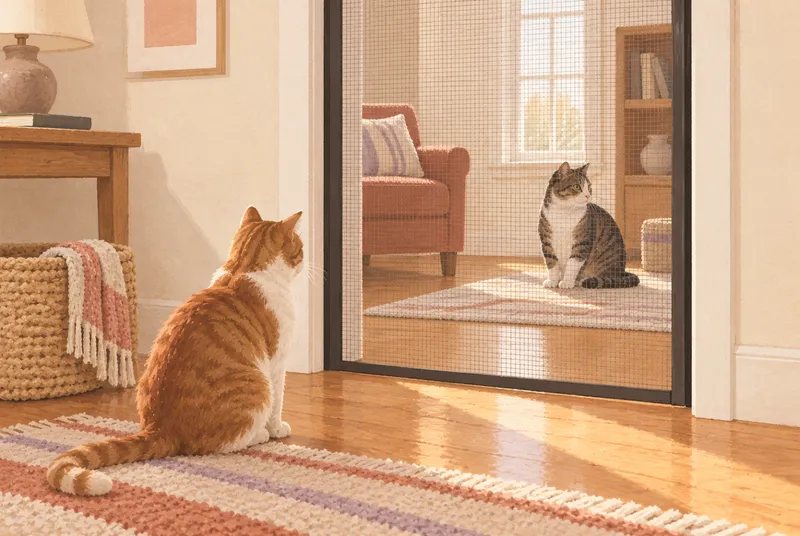 New cats
Introducing a second cat, slowly
Separate rooms, scent swapping, barriered first meetings and resources to spare — a staged plan for two cats.Read the guide Observation
How to read your Cat Says Hi photo result
Status labels, visible traits, possible breed cues and care ideas — and what a photo can never confirm.Read the guide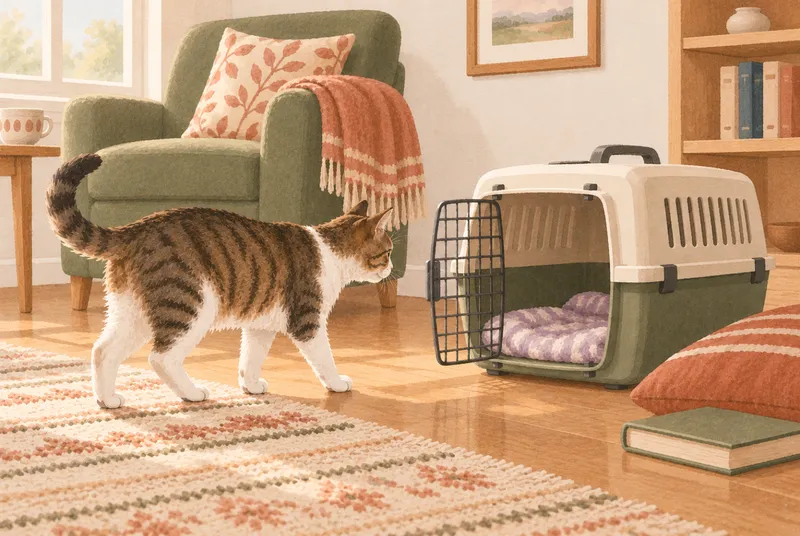 Vet visits
The carrier and the car: calmer vet trips
Make the carrier furniture, load without force, secure the car ride — and never delay urgent care over it.Read the guide Everyday care
Indoor-only or outdoors too? Weighing the everyday trade-offs
The honest ledger for both arrangements, the middle paths between them, and how to decide for your cat.Read the guide New cats
Kitten basics for a first-time carer
A feeding rhythm by age, socialisation without force, safe play and sleep, and the first vet visit.Read the guide Everyday care
Caring for an older cat at home
Easy access, warmth and gentle grooming for an ageing cat — and the changes that mean a vet call.Read the guide GroomingTeeth and home dental care for cats
Why teeth get overlooked, introducing a brush slowly, and the signs that mean a vet visit.Read the guide Behaviour
Cats and children: calm introductions and fair rules
Let the cat approach, teach a gentle stroke, protect the quiet places, and read “enough” together.Read the guide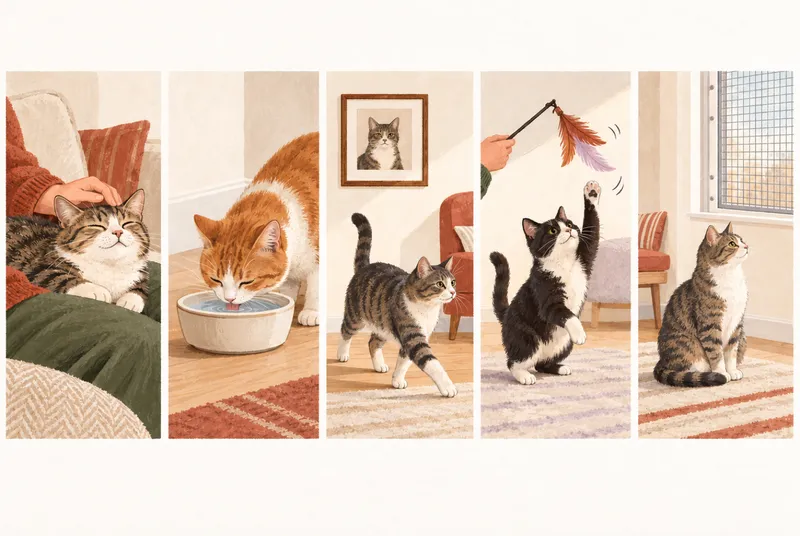 Observation
Five cat myths worth setting down
Purring and mood, cats and milk, what a photo can tell, solitary cats and play, and landing on feet.Read the guideStart with a calm photo
Our first guide covers photographing a cat’s coat and posture gently, with brushing and play as familiar everyday routines.
How we use sources
Every guide links to the organisations that publish the underlying care and welfare guidance — welfare charities such as Cats Protection and the ASPCA, veterinary colleges such as the Cornell Feline Health Center and Ohio State’s Indoor Pet Initiative, and government bodies such as the US FDA. Links sit beside the statements they support, and every guide lists its sources and the date they were last checked. These organisations do not endorse Cat Says Hi, and our guides never replace a veterinarian.
Add a photo when you’re ready
Choose a photo locally, review it, and select Analyze to send it. The result describes visible traits and everyday care ideas — never a diagnosis or a breed certificate.