
Kitten basics for a first-time carer
A kitten’s first months move quickly: four tiny meals a day, long sleeps, short bursts of play, and a world of new things to meet gently. This guide covers the everyday rhythm for weeks eight to sixteen — what to feed, how to socialise without force, and when the vet comes in.
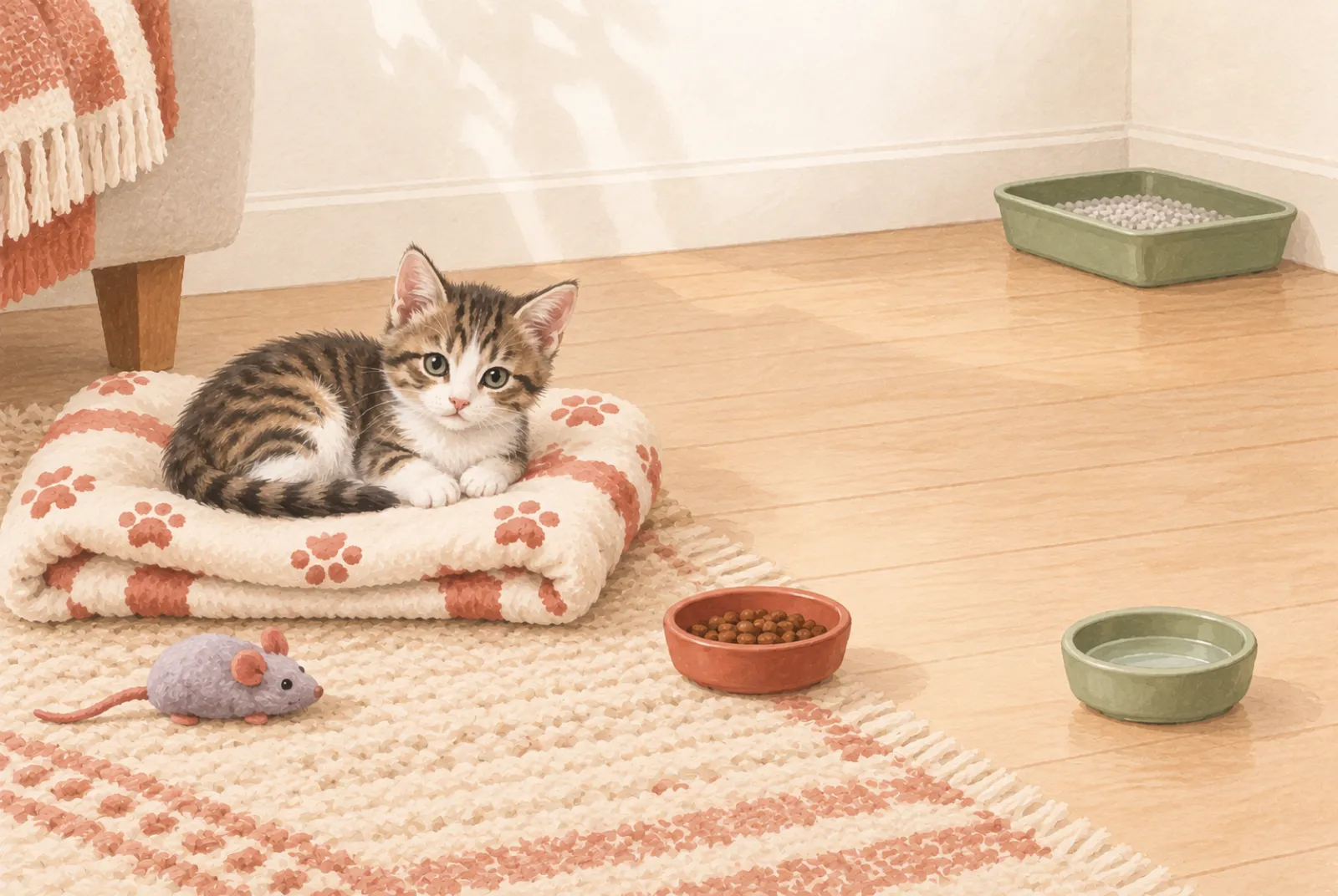
The early weeks: what changes
Most kittens come home at around eight weeks, when they are fully weaned and have learned a great deal about being a cat beside their mother and littermates. The RSPCA advises that kittens stay with their mother until they are around eight to nine weeks, and its Kitten Checklist recommends choosing a kitten who has grown up inside a home, around everyday sounds and people — that early start does some of your socialisation work for you.
Sources: RSPCA on kittens and the RSPCA Kitten Checklist (PDF).
Between eight and sixteen weeks the changes come weekly: coordination sharpens, confidence widens, teeth begin to change and a round kitten slowly takes on a young cat’s shape. The settling-in basics — one quiet room at first, essentials placed apart, the carrier left open as furniture — are the same as for any arriving cat; our first-days checklist covers that set-up. What this page adds is the kitten-specific layer: feeding by age, socialisation, safe play, and the first vet visit.
Source: VCA on bringing home a new kitten.
A kitten feeding rhythm
Kittens have small stomachs and fast metabolisms, so they eat little and often. International Cat Care’s kitten booklet recommends a complete commercial kitten food and gives a simple rhythm: kittens around eight to twelve weeks need at least four meals a day; from three to six months, at least three; from six months, at least two small meals. Follow the feeding guide on the food you have chosen for amounts, and adjust for the individual kitten with your vet’s advice.
Keep fresh water available at all times, placed apart from the food bowl. If you change foods — including switching away from whatever the kitten was eating before they arrived — do it gradually, since sudden changes commonly upset a kitten’s digestion. The booklet’s method is to mix a little more of the new food into the old each day over several days; Cats Protection takes a different route, offering the new food in a separate bowl beside the old rather than mixing them — the approach our feeding-routine guide follows for adults. The sources differ on the bowl, not on the gradual pace.
Sources: iCatCare kitten booklet (PDF) and Cats Protection on feeding your cat.
The feeding rhythm, roughly
- 8–12 weeksAt least four small meals spread across the day.
- 3–6 monthsAt least three meals a day as the stomach grows.
- 6 months onAt least two small meals; the adult rhythm takes shape.
Safe play and sleep
Play is not optional for a kitten — it is how coordination, confidence and the hunting sequence are practised. Wand and fishing-rod toys are the ideal shape: they let the kitten stalk, chase and catch while keeping teeth and claws a safe distance from fingers. Never use your hands or feet as toys; it is charming at ten weeks and a problem at two years. Supervise any toy with string or a wand and put it away afterwards, and rotate small toys to keep them interesting.
Sleep is the other half of the rhythm — kittens sleep long and deeply between bursts of activity. Give them a warm, quiet sleeping spot they can reach without help, and let sleeping kittens lie: waking a kitten to play teaches them that rest gets interrupted. As routines grow, our play and enrichment guide has the adult version of these ideas.
Source: iCatCare kitten booklet (PDF).
The first vet visit
Register your kitten with a vet and arrange a first check soon after they arrive — iCatCare’s kitten booklet suggests regular early visits (monthly while they are small) to assess health and build good feelings about the clinic, and to keep the vaccination course going: first injections typically begin around eight to nine weeks, with a second three to four weeks later and often a third at sixteen to twenty weeks. Bring any paperwork that came with the kitten — vaccination dates, worming and flea treatments, and what they have been eating. The clinic will also advise on neutering and the booster schedule, and can microchip your kitten at a vaccination or health-check appointment.
Source: iCatCare kitten booklet (PDF).
Make the visit easy on both of you. Leave the carrier out at home with bedding inside so it smells familiar — our carrier guide has the full method — and keep the car trip calm and covered. Between visits, a simple note of eating, drinking, toileting and play gives you real numbers to describe; our vet-notes guide shows the format.
Growing into adult routines
Somewhere past six months the kitten rhythm folds into the adult one: two meals a day becomes typical, and the switch from kitten to adult food usually comes around the first year, made gradually like every other food change. The habits that matter for the next fifteen years are the ones being set now — calm handling, play that is not hands, a carrier that is furniture, a vet clinic that is a familiar place.
A kitten’s coat, markings and shape change visibly week to week, which makes this a natural stage for a gentle photo habit. A calm photo note describes the visible traits in a picture — useful for watching a kitten grow into their adult coat — and never a health check or a breed verdict.
Takeaway: Small meals, gentle exposure, play that is not hands, and a vet visit early rather than late — the whole of kitten care is those four ideas done calmly.
Sources and review
- International Cat Care: kitten booklet 2024 (PDF)
- Cats Protection: feeding your cat
- RSPCA: kittens
- RSPCA: the Kitten Checklist (PDF)
- VCA Animal Hospitals: bringing home your new kitten
Sources last checked 2026-10-01. Sources support the statements near them; these organisations do not endorse Cat Says Hi.
Spotted an error? Tell us.
Watching a kitten grow
A calm photo note returns an AI-generated, provisional read of a cat’s coat, markings and posture, with everyday care ideas to go with them. Nothing is sent until you select Analyze, and it is never a health check. Read the Privacy Policy for the full data-handling details.
Socialisation without force
Socialisation is the process of a kitten learning that everyday things are safe. iCatCare describes a sensitive period in the first weeks of life — roughly two to seven weeks — when kittens accept new experiences most readily, which is why where a kitten was raised matters so much. The work does not stop at eight weeks, though: positive experiences with people, gentle handling, household sounds, grooming, travel and the veterinary visit all continue to build a confident cat.
The rule is exposure without force. Let the kitten approach; keep sessions short and end while things are still going well. When you lift a kitten, support the whole body with two hands — one under the chest, one under the hindquarters — and put them down the moment they want to leave. Pair new things with food or play so the prediction is always “this turned out fine”, and the carrier and brush count as things to practise with too.
Sources: iCatCare kitten booklet (PDF) and RSPCA on kittens.