
Your cat’s first days at home: a calm settling-in checklist
A calm checklist for a new cat’s first days: one quiet room, an open carrier, food and litter placed apart, and space to let the cat choose.
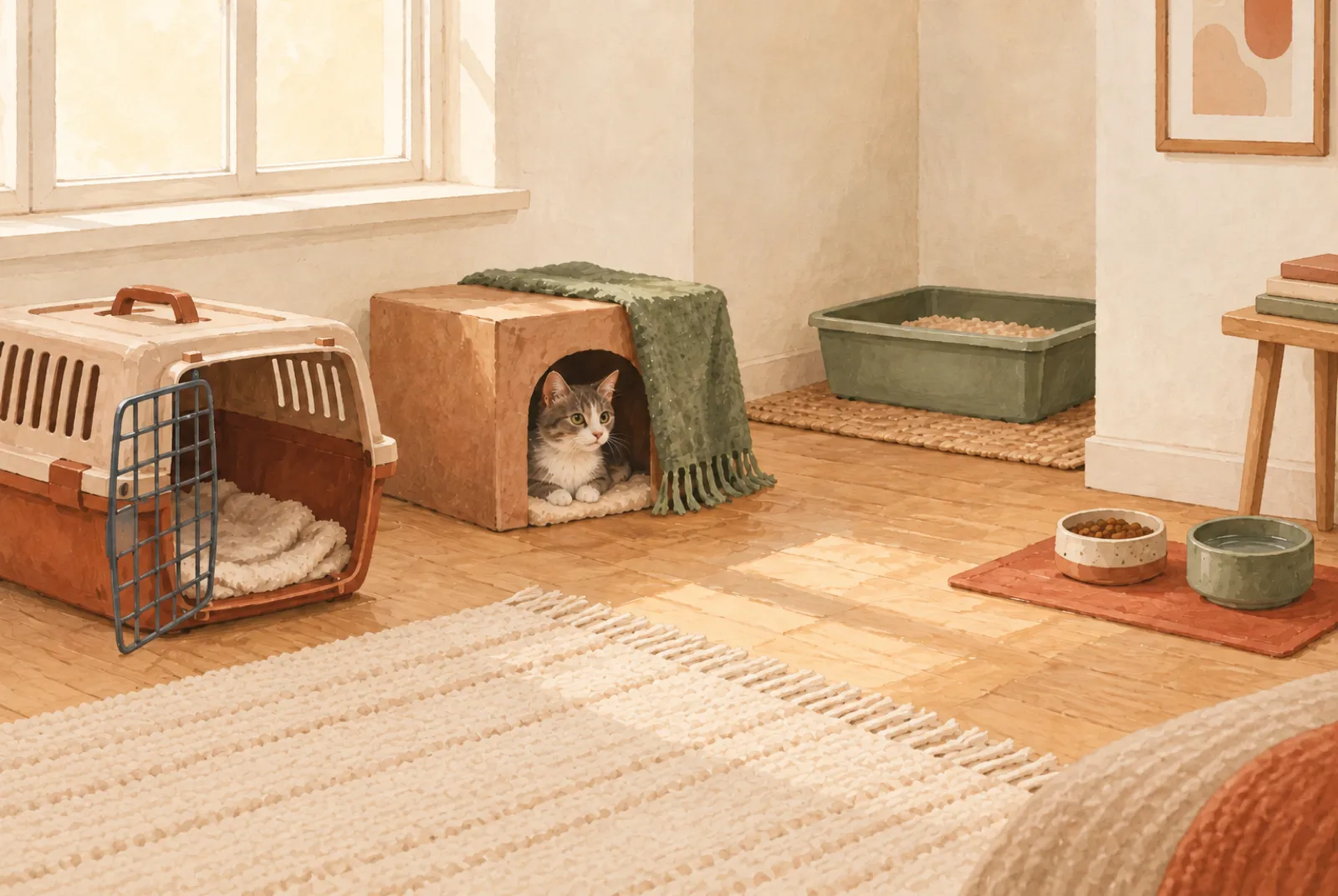
Set up one quiet room first
Before pickup day, choose one small, low-traffic room to be the cat’s whole world for the first days. VCA’s settling-in guidance recommends a quiet room away from household traffic, with food, water and a litter tray placed near where the carrier will sit. Everything the cat needs lives in that room: a hiding spot (a covered bed, a box on its side, or space under furniture that is safe and reachable), a scratching surface if you have one, food and water bowls, and the tray.
Source: VCA Animal Hospitals on bringing a new cat home.
Cat-proof the room before arrival: move or secure electrical cords, remove small items a cat could swallow, and check for gaps a frightened cat could wedge into. If the room contains houseplants, check them against the risky list in our plants and foods guide first. The ASPCA’s supply checklist — food, dishes, litter box, carrier, toys, a bed — is a sensible shopping list for this setup.
Source: ASPCA general cat care.
The base-camp checklist
- Open carrierDoor open so the cat can retreat inside at will.
- Water and foodFresh water always; food away from the tray.
- Litter trayIts own corner, away from the feeding spot.
- A hiding spotA covered bed or box the cat can retreat into.
Carrier open, door shut: the first hours
Set the carrier down in the quiet room, open its door, and let the cat decide. Some cats stroll out; many stay inside or slip straight into a hiding spot. VCA suggests giving the cat time to come out willingly, and — if a kitten is still cowering after a while — gently lifting the carrier lid and showing them where the bowls and tray sit, rather than dragging them out.
Source: VCA Animal Hospitals on bringing a new cat home.
Keep the first hours uneventful. Sit quietly in the room if you like, speak softly, and resist the urge to check on the cat every few minutes. Hiding at this stage is normal caution, not a problem to fix.
Food, water and litter placement
Keep the feeding spot apart from the litter tray — cats prefer their food and water separated from where they toilet, and VCA recommends designating them as separate areas within the safe room. Where you can, match what the cat already knows: the same food they were eating, and where possible the same type of litter, so the room asks as few adjustments as possible at once.
Source: VCA Animal Hospitals on bringing a new cat home.
Fresh water should always be available, with bowls washed and refilled daily — the ASPCA’s routine-care guidance treats that as a basic habit for cat households. Note what the cat actually eats, drinks and uses over the first days; those small observations are the baseline that later guides, like our vet-visit notes guide, build on.
Source: ASPCA general cat care.
Letting the cat choose contact
Visit the room for short, quiet spells rather than long campaigns. Let the cat come to you; offer a hand to sniff, or a toy at a comfortable distance. If they retreat, that is information, not rejection — give the room back its quiet and try again later. The same whole-moment reading our body-language guide describes applies here: posture, ears and the choice to approach or withdraw tell you more than any timetable.
When the cat does choose contact, keep it brief and end on a calm note. Trust built in small sessions outlasts trust rushed in one afternoon.
Expanding territory over days
Once the cat is eating, drinking, using the tray and moving around the room with confidence — often a few days, sometimes longer — open the map slowly. VCA’s approach is to let the cat become familiar with the base room first, then introduce the rest of the home a room at a time, staying with them in the new spaces. If the cat startles or retreats, scale back for a while.
Source: VCA Animal Hospitals on bringing a new cat home.
Keep the base room open as a retreat even after the house is available. Many cats keep returning to their first room for weeks — it is a sign the setup worked, not that settling failed.
Children and other pets come later
Hold introductions until the cat has settled into the base room. For children, the rule is calm and supervised: let the cat approach, keep voices low, and keep sessions short. For resident pets, start with scent — swapping bedding or letting each animal investigate the other’s space through a closed door — before any face-to-face meeting, and keep early meetings brief and watched. VCA’s new-cat guidance puts the same care into those first meetings: choreograph the introduction with safety in mind, keep feeding and sleeping spots separate while the animals learn each other’s signals, and expect the introduction period to take a week or two. Cornell adds a health reason for the patience — a newcomer should stay separated from resident cats until a veterinarian has examined them, especially when their health history is unknown.
Sources: VCA Animal Hospitals on bringing a new cat home and the Cornell Feline Health Center on choosing and caring for a new cat.
When a settling problem needs the vet
A shy first day or two is ordinary. What is not ordinary is a cat who persistently refuses to eat, seems in real distress rather than cautious, or shows physical signs like vomiting or difficulty breathing — those go to a veterinarian, not to a waiting game. Cornell also recommends that a new cat have a veterinary check early on, which doubles as the moment to ask about anything you have noticed in these first days.
Source: Cornell Feline Health Center on choosing and caring for a new cat.
Takeaway: One quiet room, an open carrier, and patient days — let the cat’s own confidence expand the map.
Sources and review
- VCA Animal Hospitals: bringing home your new kitten
- ASPCA: general cat care
- Cornell Feline Health Center: choosing and caring for your new cat
Sources last checked 2026-09-30. Sources support the statements near them; these organisations do not endorse Cat Says Hi.
Spotted an error? Tell us.
Settled in? Take a relaxed photo
Once your cat is at ease, a calm photo can give you a structured note on visible traits and everyday care ideas. Nothing is sent until you select Analyze. Our photo guide shows how to take it gently, and the Privacy Policy covers what is sent.