
When a cat hides: space, stress and when to check in
Hiding is one of the most ordinary things a cat does — and occasionally one of the most meaningful. Here is how to give a hiding cat a safe place to be, how to read the rest of the picture, and when hiding joined by other changes is a job for a veterinarian.
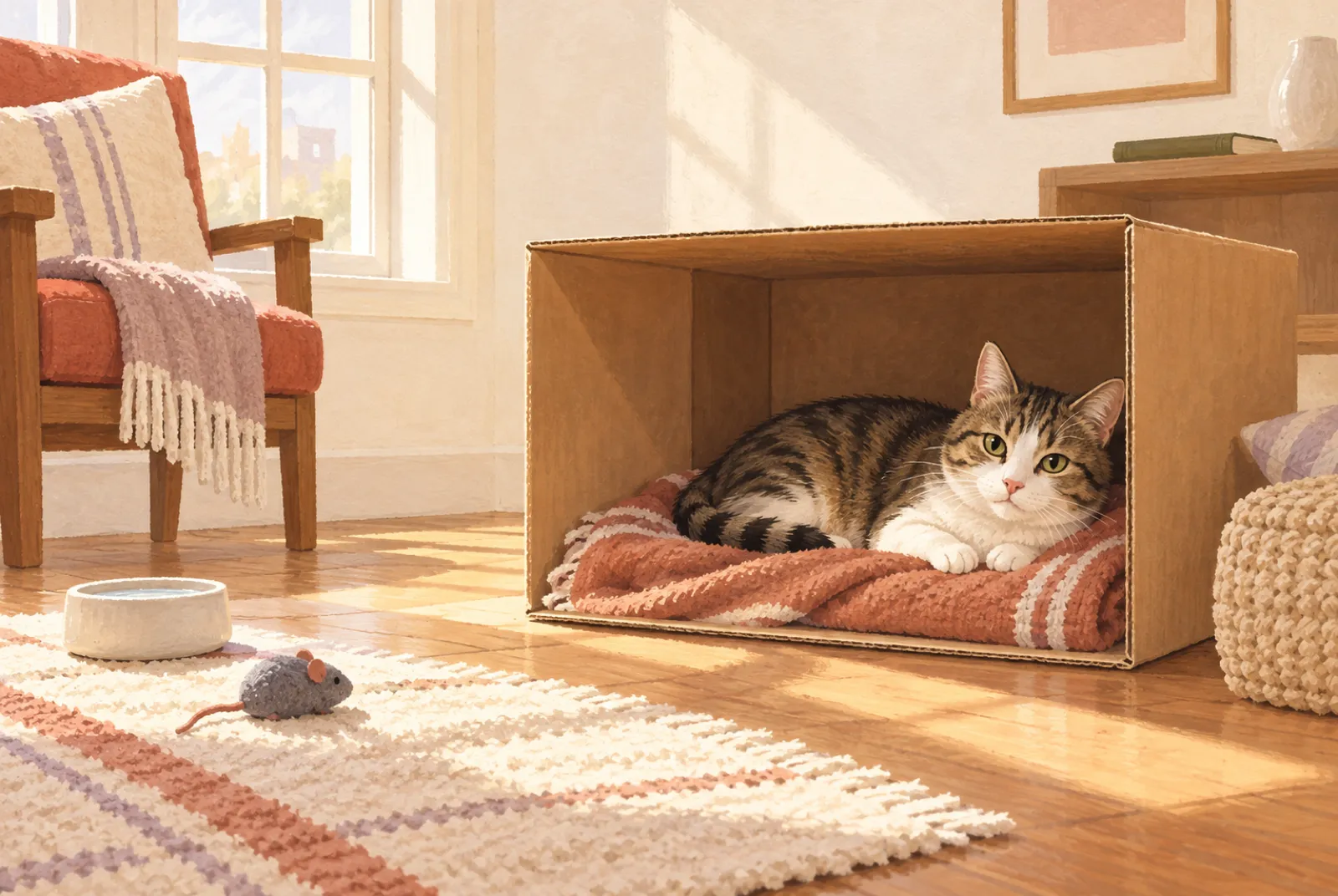
- Hiding is a normal part of a cat’s day — for sleeping, feeling secure and watching the world unnoticed.
- The answer is a better hiding place, not a forbidden one; a cat who can withdraw is a calmer cat.
- Hiding plus changes in eating, toileting or comfort needs a veterinarian, not more patience.
Hiding is normal behaviour
Under the bed, behind the sofa, inside the cupboard you left open — cats hide. Cats Protection describes hiding as part of normal behaviour: a hidden spot gives a cat somewhere safe to sleep, a concealed vantage point for pouncing on a toy, or simply a place to feel tucked away from everything.
Source: Cats Protection on cats hiding.
It helps that cats sleep a great deal — often around 12 hours a day, more for kittens and older cats. A sleeping cat is a vulnerable cat, so the instinct is to do it somewhere concealed. If your cat disappears at predictable times and reappears unbothered, you are probably looking at a routine, not a problem.
International Cat Care adds a quiet caveat: cats rarely broadcast their feelings openly. Withdrawing and becoming quiet is exactly the kind of subtle change that can be easy to miss, which is why this guide keeps coming back to one question — is the hiding different from this cat’s usual pattern?
Likely everyday reasons
Most hiding has an everyday explanation. The common ones:
- Sleep and rest. The single most common reason, and the least interesting one.
- A new or busy home. Visitors, building work, rearranged furniture, fireworks — Cats Protection lists all of these among the causes of hiding, along with other cats. A newly arrived cat often hides for days while the house learns to feel like theirs; our first-days checklist is built around exactly that stage.
- Play and curiosity. An empty box is an ambush position and a puzzle in one. Check boxes before recycling them, and make sure anything a cat crawls into has an easy way back out.
- Too much going on. Overhandling, a noisy evening, or a run-in with a housemate — human or feline — can send a cat under something for a while.
International Cat Care notes that interactions with other cats account for a large share of feline stress, and that restricted access to hiding places is itself a stressor — a home where a cat can never get away is harder to live in than one with a good retreat.
Make the hiding place safe, not forbidden
Tempting as it is to block off the spot under the bed, a hidden retreat does a cat real work. The better move is to give them a hiding place that is safe, quiet and yours-to-offer rather than theirs-to-find. Cats Protection’s recipe for a good hiding place: quiet and undisturbed, raised off the floor where possible — many cats feel safer with height — covered so they can be fully concealed, and placed away from food, water and the litter tray.
Source: Cats Protection on cats hiding.
A covered igloo bed, a cardboard box on its side with a blanket inside, or a cleared shelf in a wardrobe all qualify. Then leave it alone. International Cat Care’s guidance on stress is consistent about choice: let the cat initiate contact, and don’t drag them out of a hide — reaching in removes the very thing the spot is for.
A good hiding place is…
- Quiet and undisturbedNot beside the washing machine or the front door.
- CoveredA roof over the cat so they can be fully concealed.
- Raised where the cat likes heightMany cats feel safer off the floor.
- Easy to leaveThe cat chooses when the hiding ends — never blocked, never fetched out.
Read the rest of the cat
Hiding is one behaviour; what matters is the company it keeps. A cat dozing in the wardrobe at their usual afternoon hour is different from a cat wedged behind the sofa at midday after something crashed in the kitchen. Posture, ears, tail and the events around the hiding all change the reading — the same whole-moment approach in our body-language guide applies here.
International Cat Care draws a useful line between acute and chronic stress. Acute signs are loud: freezing or trying to escape, a crouched tense body, tail tucked, ears flattened, dilated pupils, a plaintive meow or hiss. Chronic signs are quiet — and hiding sits among them, alongside changes in eating, grooming and toileting, playing less, a heightened startle response, or becoming either withdrawn or unusually clingy.
Ordinary hiding vs a closer look
Probably ordinary
Usual spot, usual times; the cat comes out for food and play and behaves like themselves. Let them be.
Worth a closer look
New or much longer hiding, plus less eating, changed toileting, reluctance to move or a dull, scruffy coat. Note it down.
The pattern is the message: hiding that matches the cat’s habits is rest; hiding that breaks them is information.
When hiding comes with other changes
Cats Protection is direct about the shift: a cat hiding more than usual may be stressed or anxious — or feeling unwell, and either way a vet check is the way to rule illness out. Pain is the important possibility. Cats are skilled at concealing it, and the signs-of-pain list reads like a description of a hiding cat: becoming more withdrawn or hiding more than usual, eating or drinking less, stiffness after rest, a hunched crouch, a coat gone scruffy, overgrooming one spot, or a cat who cries when moving or using the tray.
Sources: Cats Protection on cats hiding and Cats Protection on signs of pain in cats.
Chronic stress deserves the same seriousness even when pain is ruled out. International Cat Care links sustained stress to behaviour problems and to stress-related illness — it names feline idiopathic cystitis among the diseases stress can be connected with — which is one more reason “they just hide a lot” is worth a conversation rather than a shrug.
Talking to the vet
The pattern that earns a vet call: hiding that is new or escalating, or hiding joined by a cat who is not eating, toileting differently, moving stiffly, or grooming less or obsessively. A sudden change always outranks a slow one; a cat who hides and refuses food is a same-day call, not a wait-and-see.
You do not need to arrive with a conclusion — arriving with observations is enough. What changed, when it started, what the cat is eating and doing in the tray, what else happened in the house that week. Our vet-visit notes guide shows how to write that down in a form a vet can use. If a health cause is ruled out and the hiding persists, the vet can also point you toward a qualified behaviourist — stress is a real problem with real help, not something a cat should just live with.
Takeaway: Give the hiding cat a better hiding place and your patience — and give a vet the hiding cat who also stops eating, toileting or moving normally.
Sources and review
- Cats Protection: cats hiding
- International Cat Care: stress in cats
- Cats Protection: signs of pain in cats
Sources last checked 2026-10-01. Sources support the statements near them; these organisations do not endorse Cat Says Hi.
Spotted an error? Tell us.
Keeping an everyday eye on things
A calm photo note returns an AI-generated, provisional read of a cat’s coat, markings and posture, with everyday care ideas to go with them. Nothing is sent until you select Analyze, and it is never a health check. Read the Privacy Policy for the full data-handling details.