
Cat body language: look at the whole moment
Notice posture, ears, tail and surroundings together, and give a cat room to choose whether to interact.
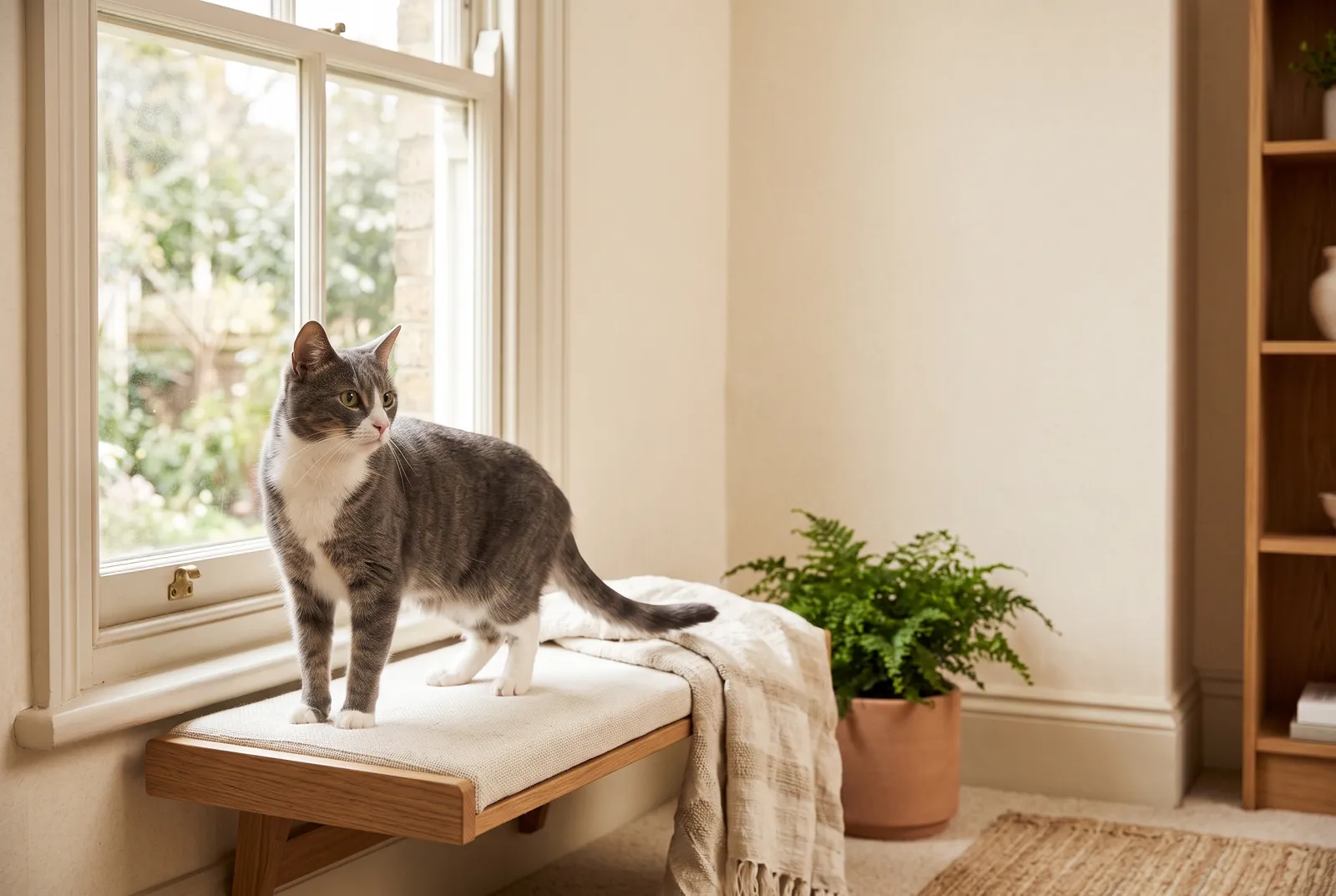
One signal is only part of the story
A cat’s tail, ears, eyes and body position can all change quickly. An upright tail with a loose body may accompany a friendly approach. Ears turned back, tense posture, retreating or hissing can be cues to pause and give space. But a single shape is not a reliable label for a cat’s feeling. Cats Protection advises reading the whole cat and the situation together.
Sources: Cats Protection on cat body language and the Cats Protection behaviour guide (PDF).
A whole-moment checklist
- PostureWhat is the whole body doing?
- Ears and tailWhere are they pointing, and how are they moving?
- SurroundingsWhat happened just before this moment?
- Room to leaveCan the cat move away if it wants to?
Ask three plain questions before drawing a conclusion: What happened just before this? What is the rest of the body doing? Can the cat move away? A crouch while watching a toy can mean something different from a crouch near a frightening noise. An arched back can appear in different situations too.
A similar crouch, two contexts
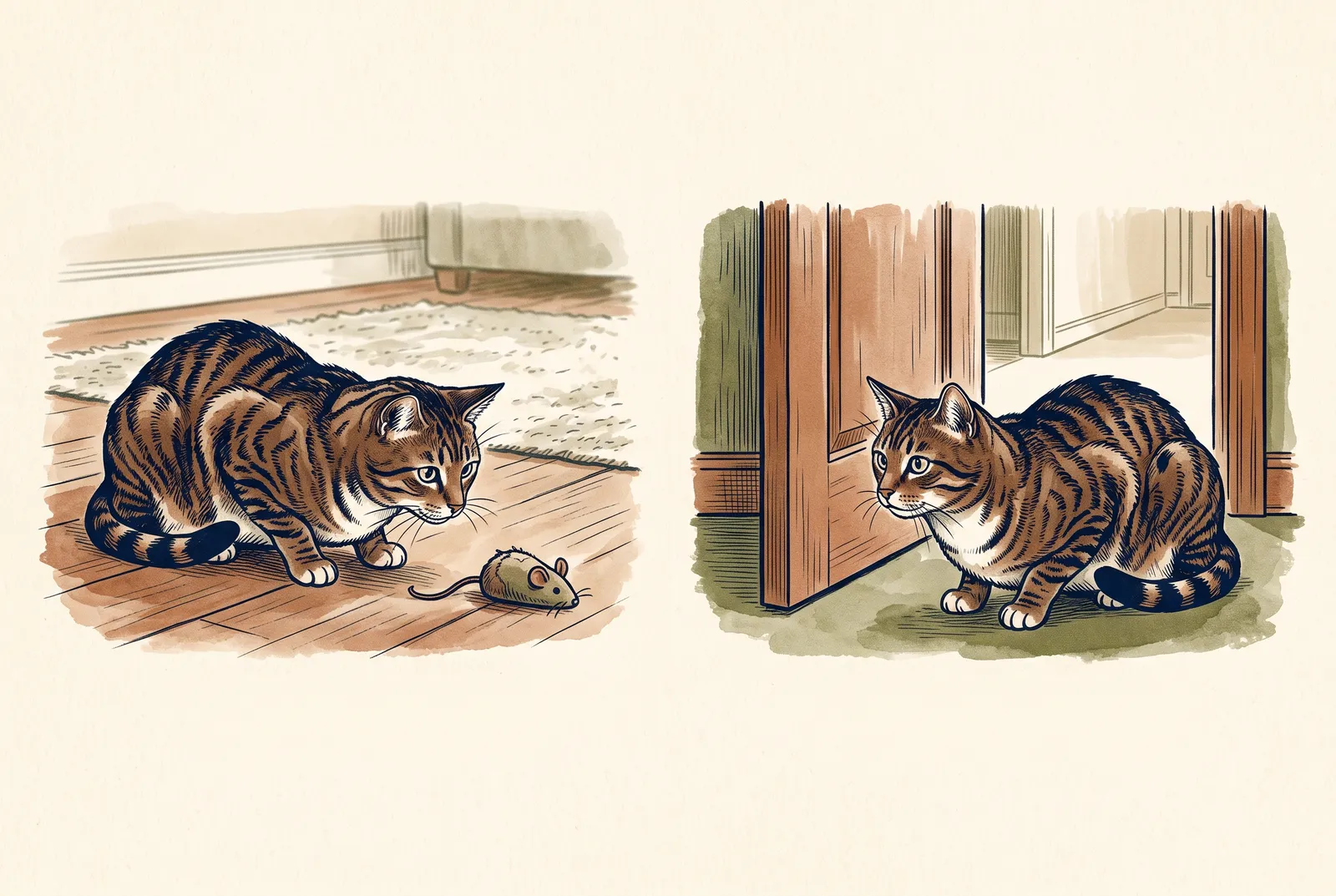
Near a familiar toyA cat may pause and watch while deciding whether to play.
Beside an open door after a sudden soundA similar shape can appear in a harder moment.
Let the cat answer with movement
If the cat approaches, keep your movement calm and give them a chance to sniff or move on. If they withdraw, freeze, flatten their ears, swish their tail rapidly, or try to leave, stop the interaction. A cat rolling over may be relaxed, but an exposed belly is not an invitation to touch it. Cats Protection’s behaviour guide recommends acknowledging that greeting without automatically rubbing the stomach.
Sources: Cats Protection on cat body language and the Cats Protection behaviour guide (PDF).
Purring is another cue that needs context. It can occur during comfortable contact, but Cats Protection also notes that cats may purr in stressful or painful situations. Watch the body and the surrounding moment rather than using a sound as proof of wellbeing.
Source: Cats Protection on cat body language.
A photograph freezes a moving conversation
A still image may show where the ears or tail were for a fraction of a second. It cannot capture what happened before, whether the cat chose to stay, or what happened next. If you make a photo note, describe the visible posture and the setting separately: “Tail raised while walking toward me in a quiet room” is more useful than “happy cat.” When the cat is done, let the observation end.
If your cat’s behaviour changes noticeably from their usual pattern, or you suspect discomfort, contact a veterinarian. Cats Protection notes that changed behaviour can be a sign of pain and calls for a health check; a body-language diagram or photo analysis cannot determine a cause.
Takeaway: Read the whole cat, the situation, and the cat’s choice to stay or leave.
Sources and review
- Cats Protection: cat body language
- Cats Protection: understanding cat behaviour guide (PDF)
- Cats Protection: signs of pain in cats
Sources last checked 27 September 2026. Sources support the statements near them; these organisations do not endorse Cat Says Hi.
Want a structured note from a photo?
Choose a photo locally, review it, and select Analyze to send it; the note describes visible traits and is not a diagnosis or a mood reading. Read the Privacy Policy for the full data-handling details.