
Cat coat patterns and breed clues: what a photo can show
Learn to describe a cat’s visible coat length, colour and markings without treating appearance as proof of breed or health.
Start with what you can actually see
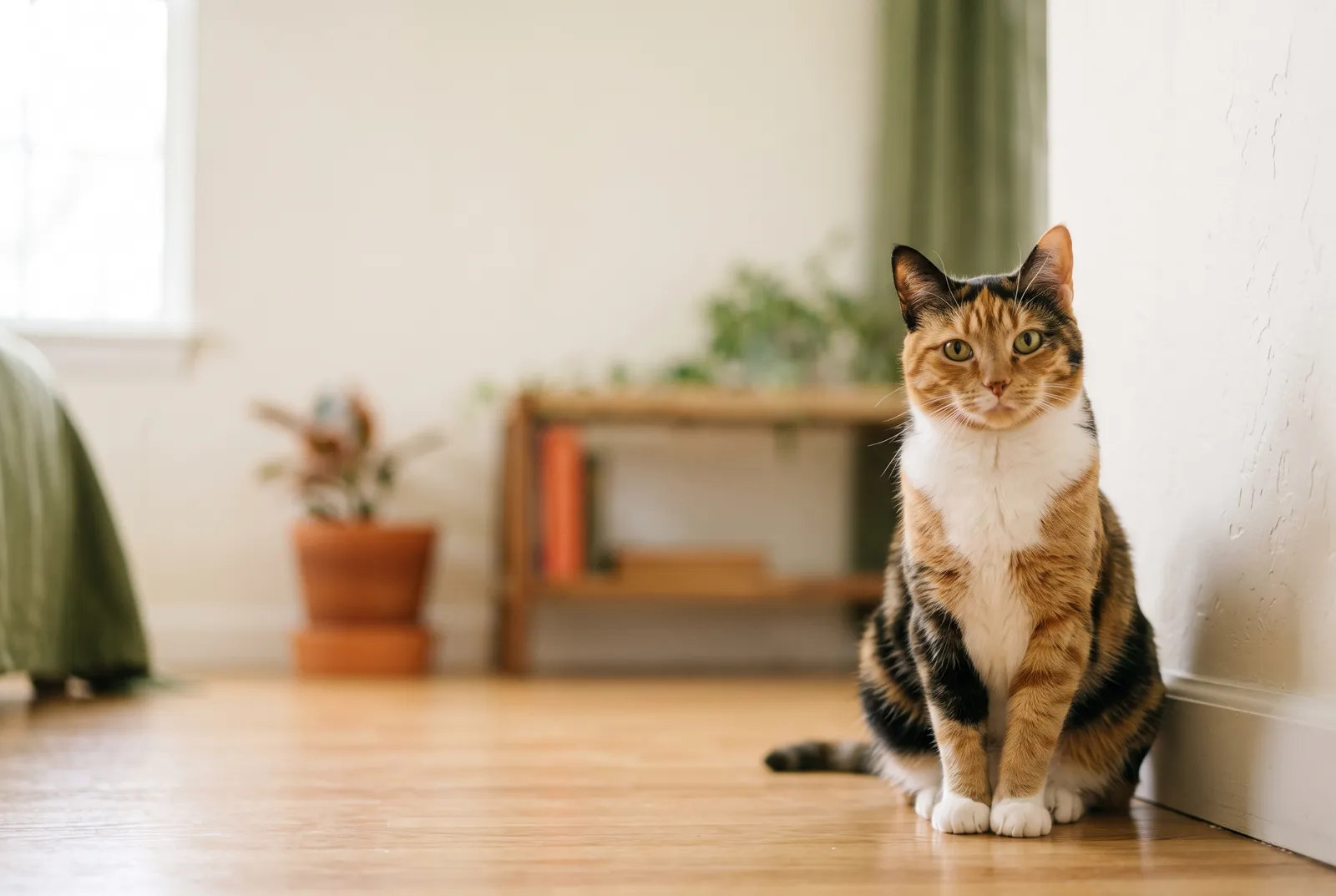
A photograph can give you useful words for a cat’s appearance: short or long-looking fur, stripes, patches, a white chest, or a dark tail tip. Those descriptions can help you compare photos over time and tell another person which cat you mean. They do not establish ancestry. A tabby pattern is a coat description, for example, not a breed certificate.
Sources: Cats Protection on pedigree cats and Cats Protection on cat colours.
Begin with the broad features: apparent coat length, main colours, and the position of markings. Then add a distinctive detail, such as a white paw or an uneven face patch. If the cat has turned away, is partly hidden, or is under coloured light, say what you cannot see. A second image in ordinary daylight may clarify a marking without asking the cat to pose. Our existing photo guide shows how to take that view calmly.
Describe, then qualify
- Apparent coat lengthShort-looking or long-looking fur, written as it appears.
- Stripes and markingsWhere darker bands and patches sit on the body.
- A distinctive detailSuch as a white chest, a pale paw, or an uneven face patch.
Pattern is not parentage
Words such as tabby and tortoiseshell describe how colour appears in a coat. Cats Protection describes a wide range of coat colours and lengths among non-pedigree cats. It also explains that a pedigree is supported by registration and parentage records from a breed association. A shared colour, face shape, or fluffy coat may resemble a named breed, but resemblance alone cannot verify one.
Sources: Cats Protection on pedigree cats and Cats Protection on cat colours.
If a photo tool offers a possible breed cue, read it as a prompt for further research, not as identification. Where a cat came from, any known records, and an experienced professional’s assessment provide context that one image lacks. Avoid choosing grooming products, food, or medical care solely because a picture suggested a breed. The cat’s actual coat, preferences, age, and veterinary advice matter more in day-to-day decisions.
Observed, possible, unknown
Observed in the photo
“Short-looking brown and black striped coat, white chin, tail partly out of frame.”
Possible, not confirmed
“A possible breed cue — a prompt for further research, not identification.”
Still unknown: parentage and registration records — no photograph can supply them.
Keep the description useful
Try: “Short-looking brown and black striped coat, white chin, tail partly out of frame.” This separates observations from uncertainty. Avoid: “Definitely a Bengal and therefore needs X.” A description can remain useful even when the breed remains unknown.
Coat appearance can change with lighting, seasonal shedding, grooming, or a camera’s colour balance. New bald areas, sore skin, or a sudden change in grooming are health questions for a veterinarian rather than a visual breed puzzle. Cornell notes that skin problems can have several causes and require clinical history and examination to identify.
Source: Cornell Feline Health Center on feline skin diseases.
Takeaway: Describe the cat in front of you first. Let breed stay a possibility unless reliable records establish it.
Sources and review
- Cats Protection: getting a pedigree cat
- Cats Protection: why are cats different colours
- Cornell Feline Health Center: feline skin diseases
Sources last checked 27 September 2026. Sources support the statements near them; these organisations do not endorse Cat Says Hi.
Want a structured note from a photo?
Choose a photo locally, review it, and select Analyze to send it; the result is not a diagnosis or a breed certificate. Read the Privacy Policy for the full data-handling details.