
How to brush a cat gently, at their pace
Choose a suitable brush, begin with brief sessions and watch the cat’s response. Learn when coat changes deserve a vet’s advice.
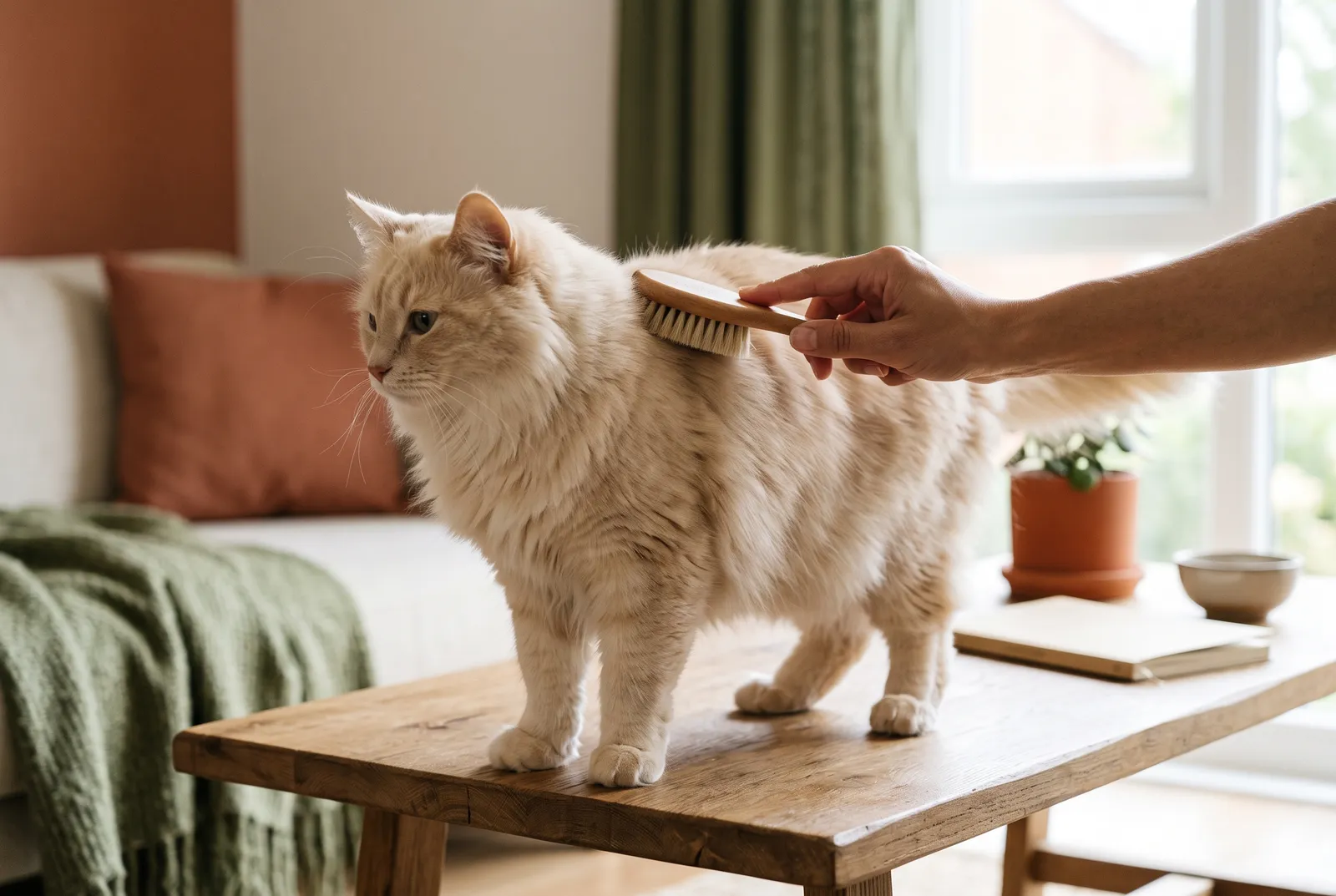
Choose for the coat and the cat
Brushing can remove loose fur and help you notice changes in a cat’s coat. The right tool depends on coat length and what the individual cat accepts. Cats Protection suggests a comb for many long-haired cats and a soft brush or grooming mitt for some short-haired cats. A long-haired cat may need daily help to prevent tangles, while a short-haired cat may need less frequent brushing; use this as a starting point, not a rigid schedule.
Source: Cats Protection on grooming your cat.
Tool choice, as examples
Soft brush or grooming mitt
Cats Protection gives a soft brush or mitt as one example some short-haired cats accept.
Comb
A comb is their example for many long-haired cats, where tangles need more attention.
Let the cat inspect the tool. Begin when they are settled, with one or two light strokes in a place they usually enjoy being touched. Pause, watch, and stop while the interaction is still comfortable. If the cat walks away, allow that choice. A short, agreeable session is more useful than a longer one imposed on a reluctant cat.
Make a simple routine
Choose a familiar quiet place and keep the brush nearby so it is not a surprise. Work through easy areas first. With a longer coat, look for tangles without pulling.
Invitation, a few strokes, pause
- Offer the brushLet the cat sniff the tool before it touches them.
- A few light strokesStart where they usually enjoy being touched.
- Pause and watchStop while the interaction is comfortable; the cat can always leave.
If the coat is matted, or touching it seems painful, ask your veterinarian or a qualified groomer for advice rather than tugging, cutting close to skin, or restraining the cat. Cats Protection describes matting as a reason long coats need more regular attention.
Sources: Cats Protection on grooming and Cats Protection on grooming long-haired cats.
The cat’s response sets the pace. Turning away, moving off, a tense body, or a swishing tail is a useful signal to pause. Some cats prefer a mitt; some accept a comb for only a moment. You can try again later. For older cats or cats that struggle to reach parts of the coat, discuss an appropriate plan with a veterinarian rather than assuming they simply need firmer brushing.
Notice changes without naming a cause
A new bald patch, sore skin, marked overgrooming, or a coat that suddenly becomes difficult to keep tidy deserves veterinary advice. These signs can have different causes. Neither a photo nor a brushing session can tell you which one applies. Cats Protection and Cornell both describe coat or skin changes as reasons to seek professional assessment.
Sources: Cats Protection on grooming and Cornell Feline Health Center on feline skin diseases.
Takeaway: Match the tool to the coat, keep sessions brief, and let the cat’s comfort decide when to stop.
Sources and review
- Cats Protection: grooming your cat
- Cats Protection: grooming long-haired cats
- Cornell Feline Health Center: loving care for older cats
- Cornell Feline Health Center: feline skin diseases
Sources last checked 27 September 2026. Sources support the statements near them; these organisations do not endorse Cat Says Hi.
Add a photo when you’re ready
Choose a photo locally, review it, and select Analyze to send it. The result offers visible coat details and everyday care ideas — never a diagnosis or a breed certificate.